
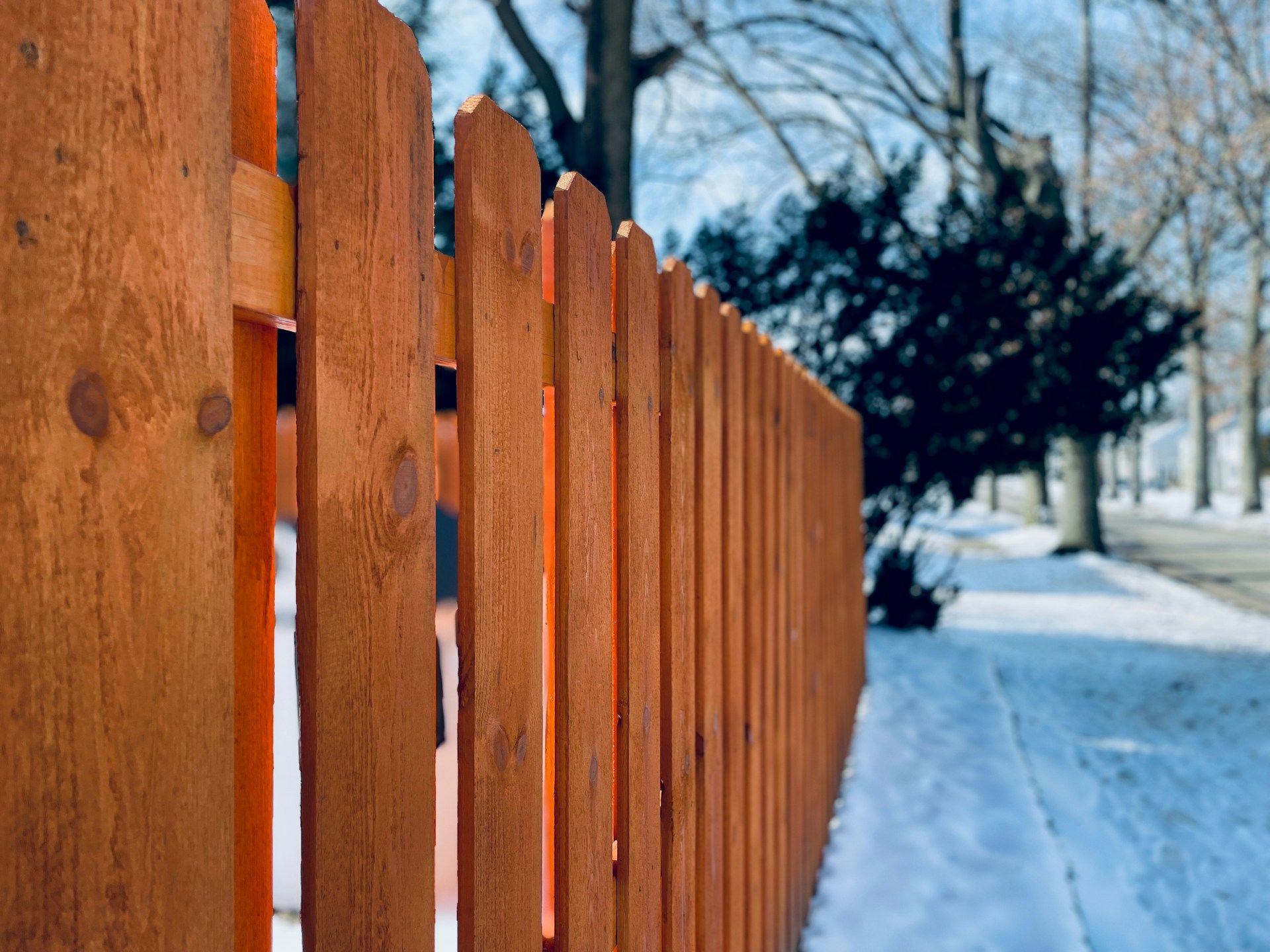
Wood and Cedar Fence Installation in Lansing, MI
Lansing Capital Fence puts up wood fences of cedar or pine in Lansing, MI, from a 3-foot picket along the front walk to 6-foot boards around the back. The lumber explains nearly all of the price gap, since cedar boards cost more to buy and outlast pine by years. The same crews work in East Lansing, Okemos, Holt, Haslett, DeWitt, Grand Ledge, Mason and Williamston.
Request a quote
Tell us why you want a fence and which yard it goes in. Someone calls you with a range.
A wood fence requires stain or a sealer every one to two years, and if you skip this step, the fence will not have a good lifespan. With vinyl fencing, there is no staining or real upkeep, but it's about double the price.
- Cedar and pine quoted together
- Every post graded for burial in soil
- Ring-shank nails that grip as boards dry
- Front-yard pickets kept to the 3-foot limit
- Stain held off until the lumber has dried
Estimate a wood fence
Typical prices per foot for Lansing jobs. Your quote follows a look at the job.
| Type | Per foot |
|---|---|
| 6 ft board, treated posts | $27 to $44 |
| Cedar privacy | $35 to $40 |
| Picket | $19 to $31 |
| Split rail | $29 to $47 |
$2,700 to $4,400
Call (517) 418-7986 for your priceAt a glance
| Board fence on treated posts | $27 to $44 per foot |
|---|---|
| Cedar privacy | $35 to $40 per foot |
| Picket | $19 to $31 per foot |
| Stain or sealer | $1.57 to $3.16 per sq ft |
| Posts | Set past 42 inches, the state frost line |
| Materials the city allows | Treated wood yes; no pallets, plywood or tarps |
Wood Fence Styles for Lansing Homes
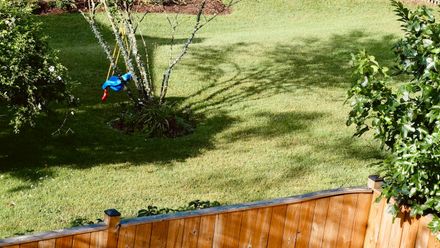
Board-on-Board Cedar Fence
A board-on-board cedar fence means that the boards are staggered, one on one side, the next one on the other side. A lot of people call this a good neighbor fence, since it looks the same on both sides. This can be a great way to build a fence, especially if it's separating two backyards. Sometimes neighbors will split the cost since it looks the same on both sides.
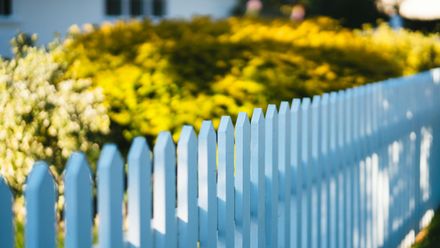
Front-Yard Picket Fence
A front-yard picket fence means that the pickets, or small boards, are spaced about their own width apart, so you can see through the fence. The cost of picket fences is pretty affordable, only $19 to $31 per foot, because not as many boards are needed as a solid fence would need.
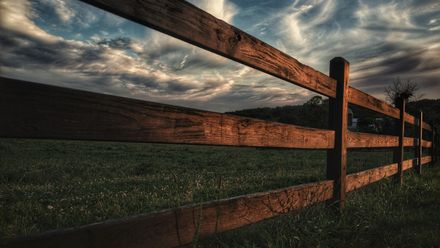
Split Rail Fence
Rails slot into holes cut through the posts, so nothing is nailed and nothing works loose. It shows where a big lot ends without hiding anything, and it's the cheapest way to fence a long rural run south of town. Got a dog? Staple welded wire to the inner face. Rail fence usually runs $29 to $47 a foot in Lansing.
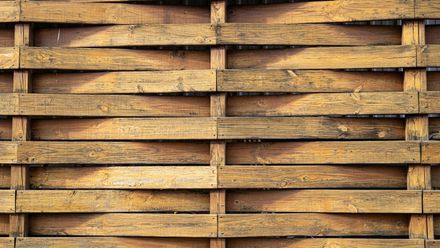
Horizontal Wood Fence
Horizontal boards make a small yard look wider. We'd save them for a newer house. Each board spans post to post, so a long one bows unless the posts stand closer together than on a vertical fence. On a slope the bays step down, since horizontal boards can't be racked to follow the ground.
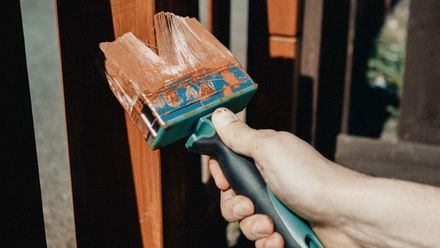
Fence Staining and Sealing
Stain seals the cut ends where water soaks in. It also slows the graying. Staining a yard fence in Lansing usually runs $1.57 to $3.16 per square foot. Six-foot boards give 6 square feet per running foot on each face, so price both faces if both are yours to finish.
Other Wood Fence Options
Wood Fence for a Rental
Close to half of Lansing's homes are rented. A rental yard wants something that keeps a tenant's dog in, not a design prize. Treated pine for boards and posts both covers that.
Kickboards
A treated 2x6 fixed under the boards holds them off the dirt and away from snowmelt. When it rots, it comes off and a new one goes on, and nothing above it moves.
Wood Gates
A wood gate wider than about 4 feet sags unless a cross brace runs from the low hinge corner toward the high latch corner. Hang it from a post a size up from the line posts.
Redwood and Cypress
Low-grade redwood usually runs $35 to $50 per foot, cypress $27 to $43. Both ship a long way to reach Michigan, and we'd stay with cedar here.
Cedar Boards, Treated Posts: Picking the Lumber
When picking out the lumber, if you’re going with a wood fence, we would recommend cedar boards with treated posts. Only the treated post sits in the soil, keeping the cedar boards a little bit off the ground to avoid constant moisture. Some builders will disagree on cedar versus pine. It’s up to the homeowner how much they want to spend and how many times they’re willing to stain and treat the new fence.
Cedar boards
Each cedar board costs more and stays straighter as it seasons. Stain goes on evenly and can be left to go gray. For boards you’ll see every day from the kitchen, we’d pay for cedar.
If it’s your backyard, try to pay more for cedar boards, which can last 15 to 25 years or even more if well taken care of. Pine boards are quite a bit cheaper, but only last five to ten years, even with staining every year.
Treated pine boards
Pine keeps the bill down. It shrinks and warps during its first summer, so gaps and a few twisted pickets are normal. For a dog run or a back line nobody sees, it’s the right call.
Tall board fences also carry height and layout rules of their own, set out on the privacy fence installation page.
Steps From Post Hole to Last Board
Read the post tags
Each treated post is stamped for burial or for above-ground use. Above-ground stock rots fast once buried. Every post gets checked before it goes in a hole.
Dig below the frost
Frost goes 42 inches down under Michigan’s residential code. Lansing gets about 142 freezing nights a year, and any shallow post rises a little each spring until the rails rack out of line.
Crown the concrete
Each footing is finished in a dome, so rain runs off rather than pooling against the wood where it meets the soil.
Hang the rails, then the boards
Boards go on with ring-shank nails, which grip the wood as it shrinks where smooth nails back out. A taut mason’s line keeps the board tops even.
Leave the bottom clear
Boards stop about 2 inches above the soil, or sit on a kickboard. Lansing averages about 50 inches of snow, and boards buried in a drift all winter rot from the bottom up.
Clean up and walk it
Offcuts and spoil leave with the crew, and every gate gets swung and latched in front of you.
Wood Fence Cost in Lansing
With contractor-grade boards over treated posts, 6-foot board fencing here runs $27 to $44 a foot installed. Cedar boards lift it to between $35 and $40 per foot on national figures, and top-grade red cedar to between $45 and $90.
If it’s a rental, you can settle for wood privacy at $27 to $44 per foot.
| Wood fence | Per linear foot, installed | Where |
|---|---|---|
| 6 ft board, treated posts | $27 to $44 | Lansing |
| Cedar privacy | $35 to $40 | US |
| Red cedar, high grade | $45 to $90 | US |
| Picket | $19 to $31 | Lansing |
| Split rail | $29 to $47 | Lansing |
| Staining, per square foot | $1.57 to $3.16 | Lansing |
The Lansing figures cover zip 48912 and 150 feet of fence, read in October 2026, with easy digging no deeper than 3 feet; the 42-inch frost line adds labor. The US rows are 2026 averages for the whole country. Gates cost extra, and so does removing an old fence.
What moves the price
- Board grade. Clear cedar with few knots costs far more than construction grade. From the patio, few people can tell them apart.
- Style. Doubling the boards, or turning them sideways on closer posts, raises the lumber bill on every foot.
- Height. A 3-foot picket fence out front costs less to run than 6-foot boards in back.
- Tear-out. Removal runs between $10 and $20 per foot, highest where the old posts are set in concrete.
- Finish. Staining at install costs more now and saves a weekend later.
One rotted picket or a loose rail is a Saturday job with a box of exterior screws. Call a crew when the posts start to move.
Get a quote on your wood and cedar fence installation
Say what the fence has to do, which part of the yard it runs through and roughly how long it is. Expect a call with a ballpark figure, and the two or three things that would move it, like a corner lot, a second gate or old posts set in concrete.
Wood and Cedar Fence Installation in nearby areas
Wood and Cedar Fence Installation FAQs
How long does a cedar fence last in Michigan?
Fences in Michigan can last 25 years or more if they're red cedar and well taken care of. Staining every one to two years and cleaning any moss or debris off the boards helps greatly. The challenge can be the fence posts. Where they enter the soil, they can go bad and rot and need to be replaced.
How soon can I stain a new wood fence?
We would recommend staining a new wood fence only after it has fully dried, several days after it has been installed in dry weather. Most of the treated pine arrives soaked with treatment, so it is best to put stain on it once it's been up for several days in the dry weather.
Is wood cheaper than vinyl in Lansing?
Yes, wood fencing is cheaper for 150 feet of fence. Wood can be around $4,101 to $6,621. 150 feet of vinyl fencing can run as much as $7,656 to $10,678. Although wood is cheaper, vinyl will last many more years.
How often should I seal wood fencing?
We recommend sealing and staining wood fencing every one to two years. If it was a wet winter, maybe stay with every year. Bare cedar boards can turn silver-gray within the first year if left untreated.
Can I put wood fencing in my front yard in Lansing?
Yes, you can put wood fencing in your front yard, but remember the maximum height is three feet, or sometimes four feet with the last foot having at least half of its wood open to see through, and that part can sit on top of the three-foot fence.
Can I replace just part of an aging wood fence?
Yes, most repairs are allowed as long as only about half of the fence needs to be rebuilt. If it's more than half, then the rules that apply today will step in and determine what needs to be done.
Request a quote
Ring (517) 418-7986 if you would rather talk now, or leave the details below and expect a callback.